HD Camera for Android: 4K Cam
- 4.6
- Rating
- 10.00M
- Installs
- Free
- Price

 Analysis by App-foxy
My first impression of HD Camera for Android: 4K Cam was straightforward: it wants to make the phone camera feel more deliberate without turning photography into a technical project. I tested it as a practical camera app rather than as a novelty filter tool, switching between quick snapshots, selfies, and more carefully framed scenes. That distinction matters because the app’s appeal is strongest when you want a little more control than the default camera offers, but still want to take a picture in a few seconds.
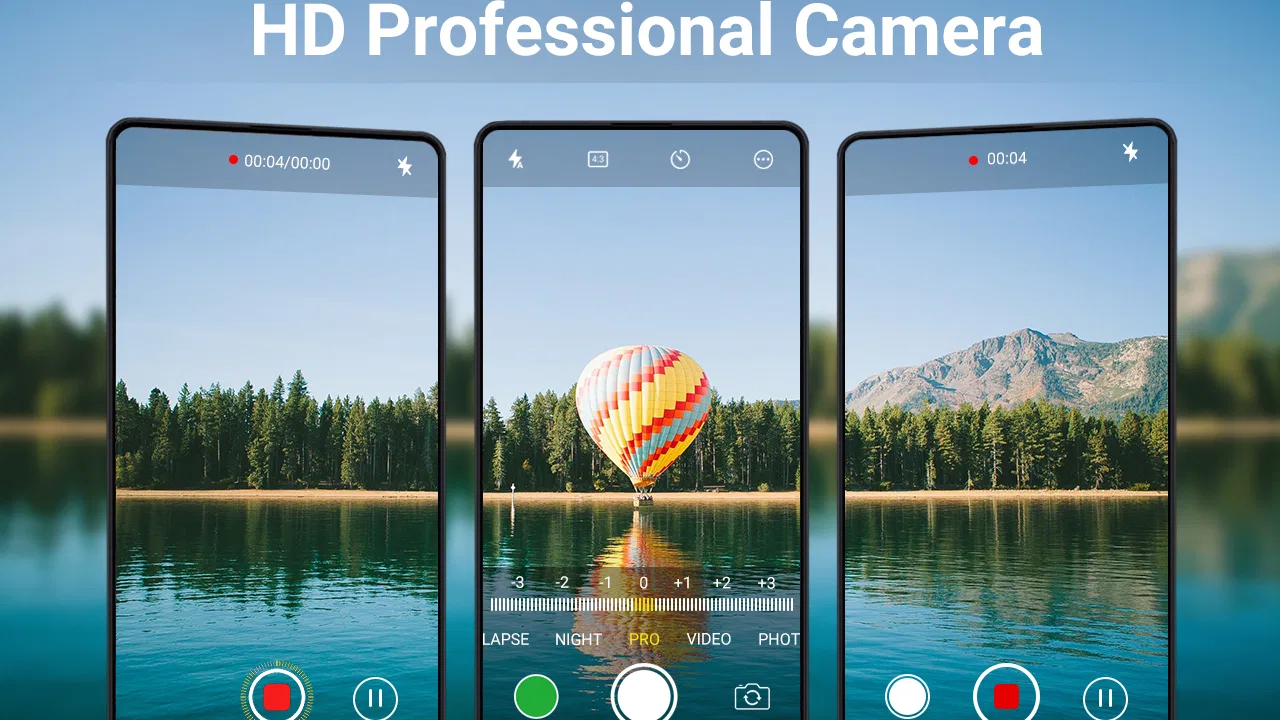
It is a free photography app from iMediaStar, aimed at everyone rather than at a narrow professional audience. The headline attraction is support for high-definition shooting, including 4K capture where the phone supports it, alongside selfie tools and camera filters. Its average rating sits at 4.5 from around 72 thousand ratings, and the app has passed 10 million installs. Those figures suggest that it has found a broad audience, but popularity alone does not answer the more useful question: will it remain on your phone after the initial experimentation?
From the first week to the daily routine
I’d use the first week to find one reliable route through the camera rather than exploring every option at once. A consistent sequence—open the app, choose the front or rear camera, frame the shot, then decide whether a filter helps—can make it easier to use when attention or time is limited. That first routine also gives me a fair basis for judging its readability and navigation.
You May Also Like

 Google Keep - Notes and lists
Google Keep’s Quiet Growth Shows the Appeal of Simpler Notes
As mobile work gets busier, Google Keep keeps winning a simple contest: capture a thought quickly, find it later, and get on with the day.

 Blood Strike: 2.5 Anniversary
Blood Strike’s Loadouts Turn Every Drop Into a Tactical Gamble
A close look at Blood Strike’s custom loadouts: how fast access to signature weapons reshapes its battle royale rhythm, rewards preparation, and narrows the gap between fights.

 Pandora - Music & Podcasts
Pandora’s Music Is Easy to Start, but Harder to Recover
Pandora’s strength is its low-effort path from a seed to a station. Its weak spot is how much confidence it asks you to place in connection, setup, and quiet recovery.

 8 Ball Pool
 Is Built on Rivalries, Rematches, and Routine
A close look at the rivalries, rematches, shared routines, and unanswered safety questions that turn a quick pool match into a persistent mobile community.

 Samsung Music
’s Quiet Strength Is Playing What You Already Own
Its reach comes less from spectacle than from dependable access to a personal library. That simplicity is both the app’s strongest retention engine and its ceiling.

 AccuWeather: Weather Radar
AccuWeather Review: A Quick, Clear Forecast for Everyday Decisions
For everyday plans, the best forecast is the one you can understand quickly. AccuWeather makes rain timing, radar, and local conditions easy to act on, with a few trade-offs.
More From Our News Desk



The first-week appeal is easy to understand
During the first week, the app encourages exploration. I found myself checking the available shooting options, trying the selfie camera, and comparing filtered images with ordinary photos. That kind of immediate feedback is useful because you can see quickly whether the interface suits the way you take pictures. If your default camera feels too limited or cluttered, a separate camera app can be refreshing simply because it gives photography its own space.
The 4K emphasis also makes sense for users who record video with a compatible phone and want to investigate a higher-resolution option without replacing their device. However, I would not treat the label as a promise that every phone will produce the same result. Camera quality still depends on the handset’s sensor, lens, processing, storage, and available system support. The sensible approach is to test a short clip first, then inspect whether the extra resolution is genuinely useful for your routine.
Selfie users get a more direct reason to try it. A dedicated selfie camera can be convenient when you regularly switch between front-facing portraits and ordinary rear-camera shots. Filters add another layer of experimentation, especially for social posts where a particular mood matters more than perfectly neutral color. I liked having those choices close at hand, but I also noticed how quickly novelty can become clutter if every image starts with a filter instead of with a clear purpose.
One practical tip is to make two passes when testing the app. First, take the same subject with the standard camera and with this one under similar light. Then repeat the test indoors, where phone cameras often reveal their real differences. This avoids judging the app only by a bright outdoor scene. It also helps you decide whether its controls and workflow are worth keeping, rather than assuming that a more feature-rich camera automatically produces better photographs.
Where it fits beside the usual camera
The built-in camera remains the strongest alternative for many people. It is already connected to the phone’s gallery, familiar settings, and device-specific image processing. It usually wins when speed, reliability, and automatic results matter more than experimentation. HD Camera for Android: 4K Cam earns its place when you want a separate set of controls, quick access to filters, or a different way to approach selfies and high-resolution capture.
It is also different from a dedicated manual camera app. Someone who wants detailed exposure control, extensive raw-photo work, or a serious editing workflow may be better served by a specialist tool designed around those needs. This app feels more accessible than that kind of software. Its strength is not turning a casual photographer into a technician; it is making extra camera options available without demanding a long learning period.
That balance makes it suitable for students, families, casual creators, and anyone who frequently takes portraits or short videos. I would be more cautious recommending it to a photographer who already has a carefully tuned workflow. If your current camera app gives you dependable results and you rarely use filters or selfie tools, installing another camera may add more decisions than value.
A realistic everyday scenario
Imagine meeting friends after work and wanting a group selfie before the light disappears. The default camera may be perfectly adequate, but this app gives you a separate place to try a subtle filter, switch to the front camera, and take several versions without opening an editor afterward. Later that evening, you might use the high-resolution video option for a short indoor clip. In that scenario, the app is useful because it combines several occasional needs in one camera rather than forcing you to move between separate tools.
The trade-off appears when the moment is less forgiving. If a child is moving, a pet is running, or a sudden event lasts only a second, I would still reach for the camera that opens fastest and behaves most predictably on that particular phone. Extra features are valuable only when they do not slow the shot down. Before relying on this app for an important occasion, I recommend practicing the exact sequence you expect to use.
What remains valuable after the novelty fades
Month-to-month value depends on repetition. Filters are recurring features only if you actually like using them, and 4K is worthwhile only if you regularly record footage that benefits from cropping or higher detail. For many users, the lasting benefit will instead be the convenience of having a second camera workflow for selfies, casual portraits, and occasional video.
This is where I think the app can earn permanent space. It does not need to replace the default camera every day. A tool that you open once a week for a specific purpose can still be worthwhile if it performs that purpose cleanly. The important question is whether your habits match its strengths. If you take mostly ordinary snapshots and never revisit filters or video settings, the app may gradually become redundant.
The current version is 3.7.7, and it runs on Android 6.0 or later. That broad compatibility is helpful for people using older phones, although older hardware may not offer the same camera capabilities as newer devices. In practice, I would judge the app on the phone you own, not on the feature list alone. A compatible app can still feel less useful if the handset lacks the camera hardware needed for its most ambitious options.
There is also a simple storage consideration with high-resolution video. Even without assigning a specific size to each recording, larger-quality footage generally deserves a little planning. I would avoid recording long clips casually, review the result soon afterward, and move or delete unwanted files before storage becomes an annoyance. That habit makes the 4K option more practical and prevents a feature intended to improve quality from creating a maintenance problem.
The maintenance burden is small, but not invisible
Keeping a camera app useful requires more than installing it once. The first task is checking its behavior on your own device: front camera, rear camera, video, filters, and the output you actually need. I would also test whether the app fits naturally with your existing gallery and sharing routine. If you have to perform several extra steps every time you want to send a photo, convenience disappears quickly.
Because the app is free, trying it carries little financial risk. There are in-app purchases ranging from $2.99 to $9.99 per item, so I would spend time with the free experience before deciding whether any optional purchase belongs in your routine. A useful rule is to pay only for a feature you have already used repeatedly and can explain clearly. Buying because a button looks interesting is how a temporary camera experiment becomes unnecessary expense.
My other maintenance recommendation is to keep your shooting habits simple. Choose a default style for ordinary photos, reserve filters for occasions where they improve the image, and use high-resolution video intentionally. This reduces the number of decisions at the moment of capture. It also makes your photo library more consistent, which matters if you later want to find, edit, or share images without sorting through many near-identical versions.
The age rating of Everyone makes the app approachable for a broad audience, but that does not remove the need for common sense when sharing photographs. Families should still decide who can use the device and where images are sent. The app’s accessibility is a reason it can work in a household, not a reason to stop thinking about personal photo habits.
Where fatigue starts to appear
The first source of fatigue is choice. Filters are fun when you are curious, but less appealing when you simply want a natural photo. A camera app can make the capture process feel slower if you repeatedly dismiss effects or search for a setting you do not use. I found that the app felt best when I approached it with a specific goal instead of opening it just to browse.
The second source is the gap between advertised capability and real hardware. The app presents itself as a fully featured 4K camera, but the phone remains the deciding factor for what can actually be recorded. Users with capable devices may get more from the high-resolution option, while others may find that the practical difference is modest. That is not a flaw unique to this app, but it is an important reason to keep expectations realistic.
A third issue is workflow overlap. If your phone’s built-in camera already handles selfies, video, filters, and sharing well, this app may duplicate functions you already have. Duplication is not automatically bad, but it means the alternative must be more pleasant or more useful. After the first week, I would ask myself which action I now perform here that I would otherwise perform less comfortably. If the answer is nothing, uninstalling it is reasonable.
There is also the possibility of inconsistent results across phones. Camera applications do not operate in a vacuum: image processing and available modes can vary with the device. I would therefore avoid treating another user’s experience as a guarantee. Test it in the lighting and situations that matter to you, particularly indoor selfies and moving subjects, where differences become more noticeable than in a static outdoor shot.
Who should keep it installed?
I think it is a good fit for someone who wants more than the default camera but less complexity than a professional manual application. It is especially sensible for people who take frequent selfies, enjoy filters in moderation, or occasionally need high-resolution video. Its free entry point makes it easy to compare with the camera already on your phone, and its broad Android compatibility gives owners of older devices a chance to try it.
It is less convincing for a person who values a completely automatic experience above everything else. If you want the fastest possible launch, the most integrated gallery behavior, and no extra app to maintain, the built-in camera is probably the better long-term choice. I would also point advanced photographers toward a more specialized camera tool if precise manual control and editing flexibility are central to their work.
For content creators, the decision depends on the stage of the process. It can be useful at capture time for quick selfies and clips, but it is not a substitute for a full editing workflow. If your main need is color grading, detailed retouching, organized publishing, or professional video management, you will still need other tools. This app is best viewed as a camera option, not as an entire production studio.
My long-term verdict
The lasting value of HD Camera for Android: 4K Cam comes from matching it to a repeatable habit, not from collecting every available feature. After the initial excitement, I would keep it installed if I regularly used its selfie workflow, filters, or device-supported high-resolution video. Those are clear, practical reasons to open it again. Without one of them, it becomes easy to return to the default camera and forget that it is there.
Its free price makes that decision forgiving, while the optional in-app purchases mean I would delay spending until the app had proved useful over time. I appreciate that it is accessible, familiar enough for casual users, and broad in purpose. I also appreciate that it does not require me to treat every photo as a serious project.
My recommendation is therefore positive but selective. Try it if your current camera feels limiting, especially for selfies, filters, or higher-resolution recording. Give it a short real-world test instead of judging it from a single outdoor photo. If it becomes the quickest way for you to handle one recurring camera task, it has earned a place on your phone. If it only creates a burst of experimentation and then duplicates everything you already do, the default camera will serve you better.
FAQs for HD Camera for Android: 4K Cam
01What are the key features of the HD Camera for Android: 4K Cam?
The HD Camera for Android: 4K Cam provides users with a range of features including 4K video recording, professional-level manual controls, and a variety of shooting modes. Additionally, it offers advanced settings such as ISO adjustment, exposure compensation, and white balance options, making it versatile for both amateur and professional photographers.
02Is the HD Camera for Android: 4K Cam suitable for beginners?
Yes, the HD Camera for Android: 4K Cam is designed to be user-friendly, providing an intuitive interface that is easy for beginners to navigate. It offers automatic modes for those who are new to photography, while also catering to more experienced users with its extensive manual controls and customizable settings.
03Does the app support external microphones for better audio quality?
The HD Camera for Android: 4K Cam does support external microphones, allowing users to enhance audio quality during video recordings. This feature is particularly beneficial for vloggers and content creators who require clear and professional sound quality in their projects.
04Are there any in-app purchases or ads in HD Camera for Android: 4K Cam?
The app is free to download, but it includes in-app purchases that unlock additional features and remove ads. While the basic version provides a comprehensive set of tools, purchasing premium options can enhance the user experience by providing advanced functionalities and an ad-free environment.
05How does the HD Camera for Android: 4K Cam perform in low-light conditions?
The HD Camera for Android: 4K Cam performs exceptionally well in low-light conditions, thanks to its advanced sensor technology and noise reduction features. Users can adjust settings such as ISO and exposure to capture clear and detailed images even in challenging lighting situations, making it a reliable choice for night photography.
Pros
- High-quality 4K video recording.
- User-friendly interface.
- Multiple shooting modes available.
- Quick photo editing tools.
- Low light performance is impressive.
Cons
- Ads can be intrusive.
- Limited cloud storage options.
- Some features require in-app purchases.
- Occasional lag on older devices.
- No direct social media sharing.

HD Camera for Android: 4K Cam
Gallery